
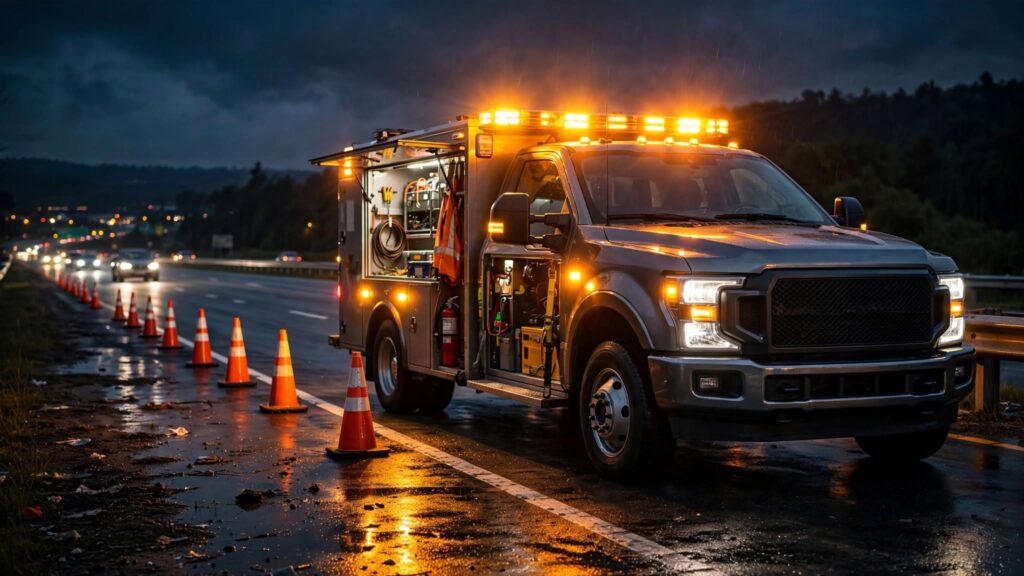
A vehicle stopped on the roadside can quickly become a hazard, especially after dark, during poor weather, or on a busy road. Other drivers may have only a short time to notice the stationary vehicle and adjust their speed or position. LED warning lights help make that vehicle easier to identify before approaching traffic gets too close.
These lights are commonly used on service vehicles, recovery trucks, utility vehicles, construction equipment, and roadside assistance vehicles. They can also be useful for drivers who regularly work or travel in situations where a vehicle may need to stop near moving traffic. Understanding how LED warning lights work, where they should be installed, and what limitations they have is an important part of roadside safety.
How LED Warning Lights Improve Vehicle Visibility
The main purpose of LED warning lights is to attract attention. Unlike ordinary vehicle lighting, warning lights usually use flashing or repeating patterns that stand out from steady headlights, taillights, and street lighting.
This distinction becomes particularly useful when a vehicle is parked somewhere drivers would not normally expect it to be. A disabled car on a shoulder, a maintenance truck beside a work area, or a recovery vehicle attending an accident scene can all create unusual traffic conditions.
LED technology is well suited to this role because LEDs illuminate quickly and can produce clearly defined flashing patterns. They are also available in several configurations, including light bars, beacon lights, grille-mounted units, surface-mounted lights, and compact warning modules.
Visibility From Different Directions Matters
A warning light is only useful when approaching motorists can actually see it. Mounting a bright light in a location blocked by an open tailgate, equipment, bodywork, or other accessories can reduce its practical value.
For roadside work, visibility may be needed from several directions. Front-facing warning lights can alert approaching traffic, while rear and side lighting can help drivers recognize the vehicle as they move around it.
Placement should therefore be considered as carefully as brightness. The goal is to create a clear visual warning without producing unnecessary glare.
Why LEDs Suit Roadside Warning Applications
LED warning lights offer several practical characteristics for vehicle use. Their compact size allows manufacturers to build warning lamps for locations where larger traditional lighting assemblies would be difficult to install.
They also draw electrical power differently from older lighting technologies, which can be useful when several auxiliary lights operate from a vehicle’s electrical system. However, lower power requirements do not mean wiring can be treated casually. Wire size, fuses, switches, relays, connectors, and grounding still need to match the lighting setup.
Anyone planning a new installation should understand the basic electrical arrangement before connecting additional equipment. A Beginner’s Guide to Wiring Auxiliary Lights the Right Way provides useful background for understanding the wiring side of auxiliary vehicle lighting.
Choosing an Effective Warning Light Setup
Not every vehicle needs the same lighting arrangement. A roadside assistance van operating mainly in urban areas may have different requirements from a recovery truck working on highways or a utility vehicle regularly parked beside active traffic.
Consider the Operating Environment
Think about where the vehicle will normally be used. Daylight, darkness, rain, fog, surrounding streetlights, road layout, and typical viewing distance can all affect how noticeable warning lighting appears.
More light is not automatically more useful. Excessively intense or poorly aimed flashing lights can distract other road users and may create glare, particularly at night. A suitable setup balances visibility with controlled light output.
Select Appropriate Flash Patterns
Flashing patterns should make the vehicle noticeable without creating unnecessary visual confusion. Some LED warning systems offer multiple patterns, allowing operators to select a mode suited to the situation.
The exact colors and flashing modes permitted can also depend on local traffic laws and the type of vehicle. Certain warning-light colors may be reserved for emergency, law-enforcement, or other authorized vehicles. Vehicle owners should check the rules that apply where the vehicle is operated before installing or using warning lighting.
Installation Quality Is Part of Roadside Safety
A warning light cannot perform reliably if its electrical connection or mounting point fails. Vehicle vibration, moisture, dirt, heat, and repeated outdoor exposure can all affect auxiliary lighting equipment.
Connections should be secure and protected where necessary, while cables should be routed away from sharp edges, moving components, and excessive heat. A suitable fuse helps protect the circuit if an electrical fault occurs.
Physical mounting deserves similar attention. Lights should remain firmly positioned during normal driving and should not interfere with airbags, vehicle controls, required factory lighting, or the driver’s view.
After installation, check the lights from several positions around the vehicle rather than judging them only while standing beside it.
Warning Lights Do Not Replace Other Safety Measures
LED warning lights are one part of roadside safety, not a complete solution. Drivers still need to consider where the vehicle is stopped, traffic speed, available shoulder space, weather, and surrounding visibility.
Where appropriate and legally permitted, hazard lights, reflective equipment, cones, warning triangles, or other traffic-control measures may provide additional visual information. People working outside the vehicle also need to remain aware of approaching traffic rather than relying on warning lights to create a protected area.
Keeping unnecessary time outside the vehicle to a minimum can also reduce exposure to moving traffic.
Maintaining LED Warning Lights
Warning lighting should be checked periodically, particularly on vehicles that depend on it for regular roadside work. Dirt can cover lenses, wiring can loosen, mounting hardware can shift, and individual light modules can develop faults.
A quick inspection should confirm that the lenses are clean, the expected flash pattern operates correctly, wiring remains protected, and every installed warning unit functions as intended.
Testing the system before it is urgently needed is much more useful than discovering a problem after stopping beside a busy road.
Conclusion
LED warning lights can make a stopped or working vehicle easier for approaching drivers to recognize, particularly in darkness, poor weather, and unusual roadside situations. Their effectiveness depends on more than simply installing a bright flashing lamp.
Proper positioning, suitable light output, reliable wiring, secure mounting, regular inspection, and compliance with local rules all matter. When LED warning lights are combined with sensible roadside procedures and other appropriate visibility measures, they become a practical part of a broader vehicle safety setup.