
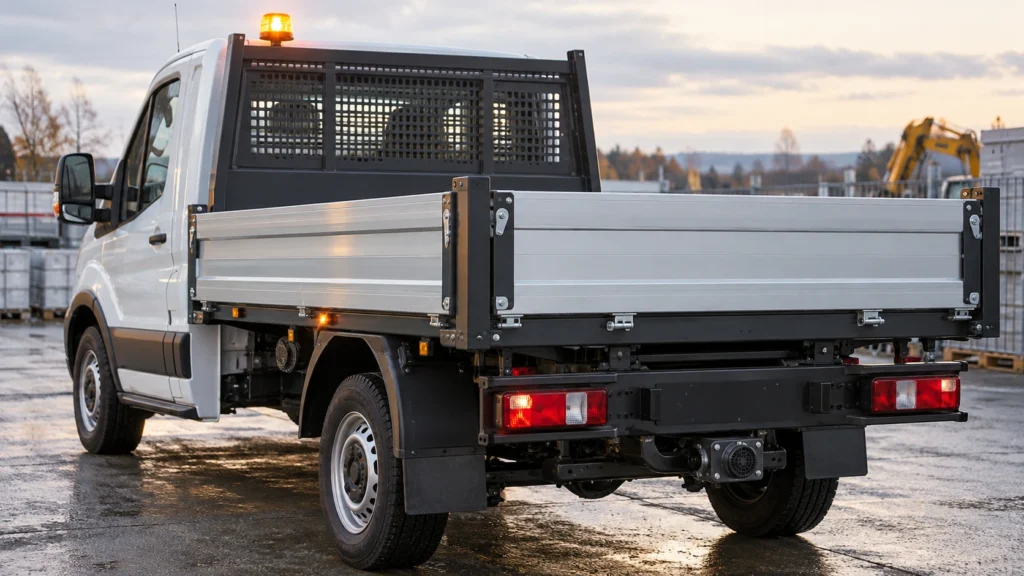
A vehicle can warn people nearby in more than one way. An amber warning light module gives a visual signal, while a reversing alarm produces an audible one when the vehicle backs up. If you are choosing between warning light modules and reversing alarms, the useful question is: What movement or hazard do people need to notice, and where will they be when it happens?
The devices serve different purposes. A light can draw attention to a vehicle that is stopped, working, or moving slowly. An alarm is focused on the reversing movement. Understanding that difference makes it easier to choose suitable equipment without expecting one device to cover every situation.
What each warning device communicates
A warning light module flashes to make a vehicle more conspicuous. It can be useful when work takes place near traffic or around other vehicles, particularly where the warning needs to remain visible while the vehicle is stationary. Its effectiveness depends on where it is mounted and whether people can see it from the directions that matter.
A reversing alarm signals that a vehicle is backing up. Sound can reach someone who is looking away from the vehicle or cannot see its lights. The alarm does not tell a bystander exactly where the vehicle is, though, and nearby machinery or other noise may make it harder to hear. Neither device replaces checking the area before moving.
The signals also have different timing. A warning light may be operated during a task that involves repeated stops and movements. A reversing alarm needs to sound when reverse is engaged. That distinction matters if the concern is a single reversing manoeuvre rather than the vehicle’s presence throughout a job.
When a warning light module makes sense
Choose a warning light when the main need is to make the vehicle noticeable during work. A compact module can suit a grille, vehicle corner, or other tight mounting position. For example, a round amber light-emitting-diode module may measure 3.8 cm across. It may support 12 V and 24 V systems and offer multiple flash patterns and synchronization with other compatible modules.
Its small size creates a useful option where a larger warning lamp would be difficult to fit. It does not mean one small light will be visible from every angle. Consider whether a grille installation, for instance, will be seen by people approaching from the side or rear. A module may have warning-light and electromagnetic-compatibility approvals, but the suitability of a complete installation still depends on its placement and the applicable requirements.
When a reversing alarm is the better fit
A reversing alarm is the more direct choice when the concern is people near the vehicle as it backs up. That can include a worksite where pedestrians, other drivers, or colleagues may be focused on their own tasks. The sound gives them a cue to look for the moving vehicle, especially when they cannot see its rear lights.
A compact reversing alarm may be specified at 87 dB and work with 12 V and 24 V systems. Its housing may use glass-filled nylon, with electronics enclosed in epoxy for protection against moisture, dust, and vibration. Those details may matter on a vehicle exposed to rough working conditions. Sound level alone, however, does not establish how clearly an alarm will be heard at every site.
Can one vehicle need both?
Yes, if it needs to communicate both its working presence and its reversing movement. The two signals complement each other because they reach people in different ways. A flashing module may be noticed by someone facing the vehicle, while an alarm can prompt someone facing away to turn and look.
Combining devices should be a response to the vehicle’s actual use, rather than a default shopping list. A vehicle that rarely reverses near people may have a different priority from one that frequently manoeuvres in a shared yard. Equally, a reversing alarm does little to make a parked work vehicle visible to approaching traffic.
Rear-light assemblies can also affect the choice. Some rear-light configurations include a reversing alarm alongside the reversing-light function; other configurations do not. If you are replacing an existing rear light, check the exact variant rather than assuming every version includes sound.
For more detailed information on this topic, read our guide on Select Lumens vs Lux: Reading Vehicle Light Specifications Correctly.
Check the installation before deciding
The best option has to fit the vehicle and its operating environment. Before ordering or installing either device, work through a few practical questions:
- Where are people likely to be? Think about the front, sides, and rear of the vehicle, as well as places where its bodywork or equipment blocks a view.
- What will compete with the warning? Bright surroundings can affect how readily a light is noticed; site noise can affect whether an alarm is heard.
- When should it operate? Plan how a light will be controlled and confirm that a reversing alarm will activate with the intended reversing function.
- Will it fit and connect correctly? Check mounting space, voltage, wiring, and the details of the specific product or rear-light variant.
After installation, check the warning from the places people actually approach or work. A module that flashes and an alarm that sounds are only useful if their signals can be perceived where they are needed.
Start with the movement you need to warn about. For a vehicle working in view of others, a warning light module may address the main concern. For backing up near people, a reversing alarm gives a more specific cue. Where both situations occur, use the two signals together as part of a wider approach to visibility, careful manoeuvring, and checking the area.